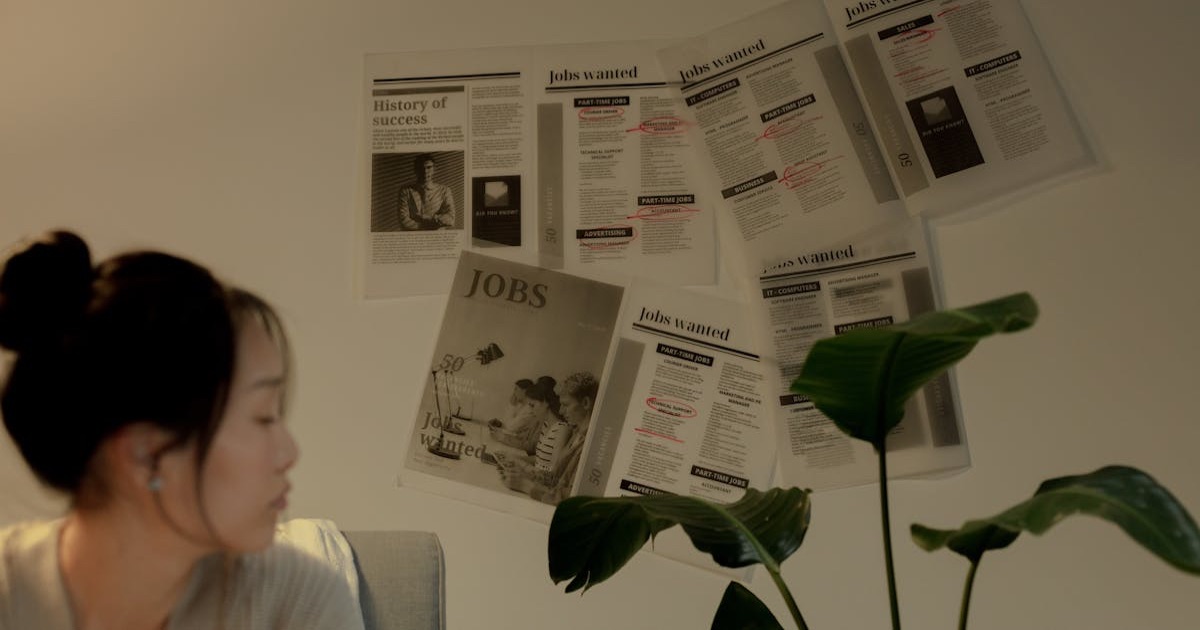
What Has Changed Since Last Year
The job market heading into 2026 looks different from what we saw in 2024 and 2025. The post-pandemic hiring chaos has fully settled. Companies have figured out their headcount plans, remote work policies are no longer shifting every quarter, and the "great resignation" energy has been replaced by a more measured hiring environment.
Here is what matters for your search right now:
- Hiring is steady but selective. Companies are hiring, but for fewer roles with higher expectations. They want proof of impact, not just years of experience.
- AI has changed both sides of the table. Recruiters use AI to screen resumes faster, and candidates use AI to apply faster. The result: more noise, and the candidates who break through are the ones who sound human and specific.
- Skills-based hiring is accelerating. More employers are dropping degree requirements and focusing on demonstrated skills. This is good news if you have the portfolio or project history to back it up.
- Salary transparency laws have expanded. With more states requiring pay ranges in postings, you have better information earlier in the process. Use it to filter roles and negotiate from day one.
The overall takeaway: volume-based job searching is a losing strategy. Precision wins.
Build a Target Company List Before You Apply Anywhere
Most job seekers start by scrolling job boards. That is backwards. Start by identifying the companies you actually want to work for, then look for openings.
Here is the process:
- Write down your non-negotiables. Remote vs. hybrid? Company size? Industry? Growth stage? Be honest about what you need, not just what sounds good.
- Build a list of 15-20 target companies. Use LinkedIn, Glassdoor, and industry publications to find companies that match your criteria.
- Follow them everywhere. LinkedIn company pages, their engineering or company blogs, their leadership on Twitter or Threads. You want to know what they are working on before you apply.
- Check their careers pages weekly. Many roles are posted internally or on the company site days before they hit LinkedIn or Indeed.
This approach flips the dynamic. Instead of reacting to whatever shows up in your feed, you are proactively pursuing opportunities at companies where you have done your homework.
Networking in 2026: Quality Over Quantity
The word "networking" still makes people uncomfortable, and for good reason. Most networking advice boils down to "send cold messages to strangers and ask for things." That does not work, and it never really did.
What works in 2026 is building genuine professional relationships around shared interests and mutual value.
Reactivate Your Existing Network First
You probably know more people than you think. Former colleagues, classmates, people you have worked with on projects, connections from conferences or online communities. These are warm contacts who already have context on you.
Send a simple, honest check-in:
Hey [Name], hope things are going well at [Company]. I'm
exploring new opportunities in [area] and wanted to reconnect.
Would you be open to a quick 15-minute chat this week? No
pressure at all — I'd just love to hear what you've been
working on.
No tricks. No "I'd love to pick your brain." Just a straightforward, time-bounded ask from someone they already know.
Create Reasons for People to Come to You
The most effective networkers in 2026 are not the ones sending the most messages. They are the ones creating value that attracts connections organically:
- Share a thoughtful take on an industry development on LinkedIn once a week
- Comment substantively on posts from people in your target companies
- Write a short case study about a problem you solved at work
- Curate and share relevant industry reports or data
When you eventually reach out to someone at a target company, they may already recognize your name. That changes the entire conversation.
The Informational Interview Framework
When you do land a conversation with someone at a company you are interested in, do not waste it by asking generic questions. Come prepared:
| Do Ask | Do Not Ask |
|---|---|
| "What's the biggest challenge your team is facing right now?" | "What does your company do?" |
| "How does [recent company initiative] affect your day-to-day?" | "Can you get me a job there?" |
| "What skills are you seeing as most valuable on your team?" | "What's the salary range?" |
| "What surprised you most about working there?" | "Is it hard to get hired?" |
The goal is to learn things you cannot find online, demonstrate genuine curiosity, and leave them thinking "this person would be a great addition to the team."
Tailor Your Resume for Every Application
This advice has been around for years because it still works. In 2026, with AI-powered applicant tracking systems getting more sophisticated, it matters even more.
Here is the minimum you should do for every application:
- Read the entire job description. Highlight the top 5 requirements.
- Adjust your summary or headline to mirror the language of the role.
- Reorder your bullet points so the most relevant experience appears first under each role.
- Match keywords exactly. If the posting says "stakeholder management," do not write "working with stakeholders." Use their exact phrase.
- Cut irrelevant content. If you are applying for a product management role, your barista experience from college can go.
A tailored resume takes 20-30 minutes per application. An untailored resume gets you a 2-3% callback rate. A tailored one pushes that to 8-12%. That math is not close.
Use AI Tools as Assistants, Not Replacements
AI tools for job searching have matured significantly. In 2026, there is no reason not to use them — but there is a right and wrong way.
Use AI for:
- Drafting initial versions of cover letters (then edit heavily for your voice)
- Identifying keywords in job descriptions you might miss
- Tailoring your resume bullets to specific roles
- Practicing interview answers with AI mock interviews
- Researching companies and summarizing their recent news
Do not use AI for:
- Sending mass-generated applications that all sound the same
- Writing entire cover letters without editing them (recruiters can tell)
- Replacing genuine networking with automated LinkedIn messages
- Skipping your own research because "the AI summarized it"
The candidates who are winning right now treat AI like a research assistant, not a replacement for thinking. The tool should make you faster and sharper, not lazier.
Track Everything in a System
A job search without a tracking system is chaos. You will forget which version of your resume you sent where, miss follow-up windows, and lose track of conversations.
Use a spreadsheet, a Notion board, or any tool you will actually update. Track these fields:
Company | Role | Date Applied | Resume Version |
Status | Contact | Follow-up Date | Notes
Review your tracker every Monday morning. It takes 10 minutes and keeps your search organized. After a few weeks, patterns emerge: which sources produce interviews, which resume versions perform better, which types of roles you are hearing back from.
Data beats gut feeling. Let your tracker guide your strategy.
The Follow-Up Cadence That Works
Most candidates apply and wait. That passivity costs interviews. Here is a follow-up cadence that is assertive without being annoying:
- Day 1: Submit your application
- Day 2-3: Find the hiring manager or recruiter on LinkedIn. Send a connection request with a short note referencing the role.
- Day 7-10: If connected, send a brief message reiterating your interest and one specific reason you are a fit.
- Day 14: If you have an email, send a concise follow-up. Three to four sentences max.
- Day 21+: If still no response, move on mentally. Keep the connection alive but invest your energy elsewhere.
Following up is not desperate. It is what organized, serious candidates do. Recruiters expect it.
Stay Consistent, Not Frantic
The biggest risk in a job search is not rejection. It is burnout. Sending 50 applications in a weekend and then doing nothing for two weeks is less effective than sending 5 targeted applications every week for three months.
Set a sustainable rhythm: two to three hours per day on active searching, and protect the rest of your time. Exercise, maintain your hobbies, and talk to people about things other than your job search. The candidates who stay consistent are the ones who land the best roles, because they maintain their energy and sharpness throughout the process.
Get Your Resume in Shape
None of these strategies matter if your resume is not ready. Before you launch your 2026 job search, make sure your resume is tailored, keyword-optimized, and clearly demonstrates your impact.
Superpower Resume builds targeted resumes matched to specific job descriptions. Upload your experience, paste a job posting, and get an optimized resume in minutes. Start your search with your strongest foot forward.
Sources
- Bureau of Labor Statistics: Job Openings and Labor Turnover Survey — Monthly data on hiring activity, openings, and separations across the U.S. labor market
- LinkedIn Economic Graph: Workforce Report — Data-driven insights on hiring trends, in-demand skills, and shifts in employer behavior
- Harvard Business Review: How to Get the Job You Want — Research-backed strategies for navigating competitive job markets
The Job Search Hub
Your map for the whole search:
Strategy: job search strategies · new graduate · remote · tailor every application
Finding openings: use job boards · best time to apply · hidden job market
Standing out: research the company · follow up after applying
AI tools: ChatGPT prompts · future-proof your career
Glossary: job application · job board · hidden job market · employee referral · hiring manager