Two Formats, Two Skill Sets
Panel interviews and group interviews both involve multiple people, but they test entirely different things.
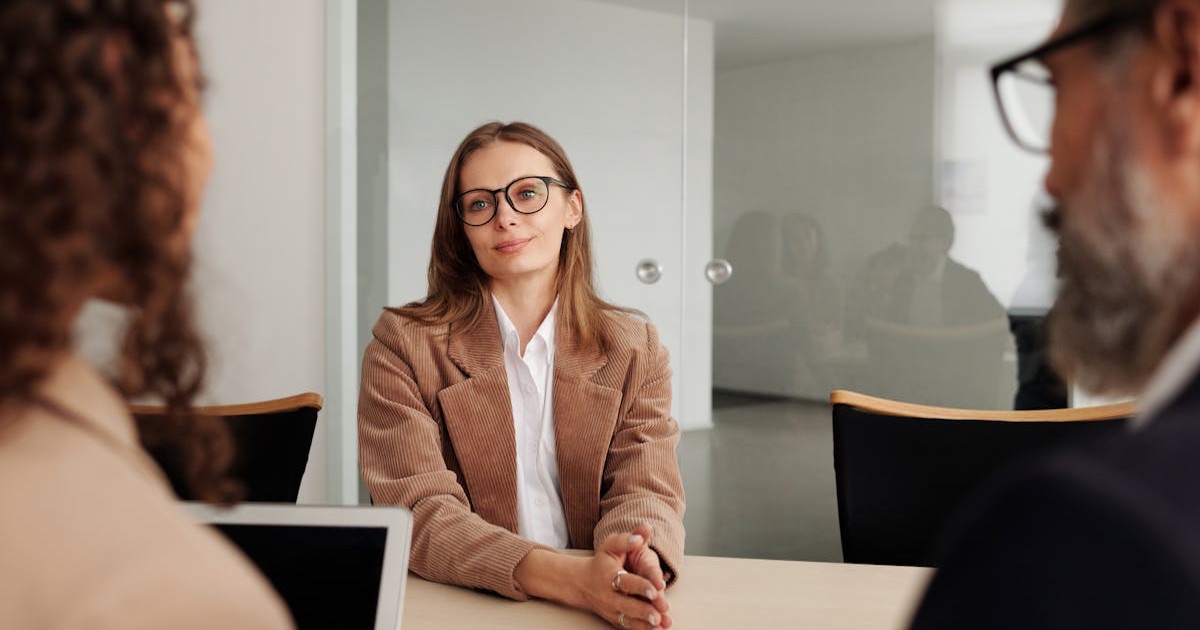
A panel interview puts you in front of 2-6 interviewers from the company. Each panelist typically represents a different stakeholder group -- your would-be manager, a peer, an HR representative, someone from a cross-functional team. They're evaluating you from multiple angles simultaneously.
A group interview puts you alongside other candidates. You might be asked to solve a problem together, discuss a case study, or participate in a simulated work exercise. The interviewers are watching from the outside, evaluating how you collaborate, communicate, and lead.
Both formats are increasingly common. According to SHRM, about 25% of organizations use panel interviews for at least some roles, and group interviews are standard practice in consulting, retail management, and any role that requires heavy teamwork. If you've only ever practiced for one-on-one interviews, these formats can catch you off guard.
Panel Interviews: How to Handle the Room
Before the Interview
Research every panelist. When you get the interview confirmation, ask for the names and titles of everyone who will be in the room. Then look each person up on LinkedIn. Understanding their role helps you anticipate what they'll care about.
| Panelist Role | What They're Evaluating | How to Prepare |
|---|---|---|
| Hiring manager | Can you do the job? Will you fit the team? | Prepare role-specific examples and results |
| HR representative | Culture fit, communication, red flags | Practice behavioral questions (STAR format) |
| Peer/team member | Will you be easy to work with? | Show collaboration examples, ask about team dynamics |
| Skip-level manager | Strategic thinking, long-term potential | Prepare to discuss big-picture contributions |
| Cross-functional partner | Can you work across teams? | Highlight cross-team projects, communication skills |
Prepare extra examples. In a one-on-one interview, you might get 5-7 questions. In a panel, you could get 10-15 because each panelist has their own agenda. Prepare at least 8-10 strong STAR stories so you don't repeat yourself.
During the Interview
Address the person who asked, but include everyone. When a panelist asks a question, make primary eye contact with them as you begin your answer. But as you continue, naturally shift your gaze to include other panelists. This makes everyone feel engaged, not just the questioner.
A practical rhythm: start your answer looking at the person who asked, shift to another panelist for the middle section, and return to the original questioner for your conclusion.
Don't ignore the quiet panelist. There's almost always one person who asks fewer questions or sits slightly back from the group. This person is still evaluating you. Occasionally direct a comment or eye contact their way. Sometimes the quiet panelist is the most senior person in the room.
Handle rapid-fire questions gracefully. Panel interviews can feel like a tennis match -- a question from the left, then the right, then across the table. If you need a moment to think, it's fine to say: "That's a great question. Let me think about that for a second." A thoughtful two-second pause is better than a rambling answer.
Watch for disagreement among panelists. Occasionally, panelists will have different perspectives on what the role needs. If one asks about individual contribution and another asks about team leadership, don't assume one is "right." Acknowledge both: "I've found that the best outcomes come from strong individual work within a collaborative framework, and I have examples of both."
Take notes. Bring a notebook and pen. When a panelist makes a specific point about the team, the role, or a challenge, jot it down. It shows engagement and gives you material for your follow-up emails.
The Body Language Challenge
In a one-on-one interview, body language is straightforward. In a panel, it gets complicated because you're managing relationships with multiple people simultaneously.
- Sit up straight and angle your chair slightly so you can see everyone without swiveling dramatically
- Keep your hands visible on the table -- clasped, relaxed, or gesturing naturally
- Smile and nod when a panelist is speaking, even if they're not addressing you directly
- Avoid fixating on one person (usually the hiring manager) and ignoring the others
- Mirror the formality level of the most formal person in the room
After the Panel Interview
Send individual thank-you emails to every panelist. This is where most candidates fail. They send one generic thank-you to the hiring manager and ignore everyone else. Instead, send a personalized email to each person within 24 hours.
Reference something specific from your conversation with that individual:
"Hi Marcus, thank you for taking the time to speak with me today. I especially appreciated your question about handling cross-functional projects -- it got me thinking more about how my experience at [Company] with the product and engineering teams would apply to this role. I'm excited about the opportunity and look forward to hearing from you."
If you don't have everyone's email, ask the recruiter or HR contact: "Could you share the email addresses of the panel members so I can send thank-you notes?" This is a completely normal request.
Group Interviews: How to Lead Without Dominating
Group interviews are a different animal entirely. You're being evaluated alongside your competition, and the temptation is to be the loudest, most assertive person in the room. Resist it.
What Interviewers Are Actually Watching For
Interviewers in group settings are not looking for the person who talks the most. They're evaluating:
- Active listening: Do you build on what others say, or do you wait for your turn to talk?
- Facilitation: Can you move a group toward a decision without steamrolling?
- Inclusion: Do you bring quieter members into the conversation?
- Quality of contribution: When you do speak, is it substantive?
- Grace under pressure: How do you handle disagreement or being interrupted?
The candidate who says "I think Maria made a great point about the timeline -- and building on that, what if we also considered..." will almost always outscore the candidate who says "I think the answer is X" five times in a row.
Tactics for Group Exercises
Speak early but not first. If you're the very first person to speak in every round, it can come across as domineering. But if you wait too long, you risk being invisible. Aim to be the second or third person to contribute in the opening moments, then stay consistently engaged throughout.
Be the organizer. If the group is given a problem to solve and nobody is structuring the conversation, step in with a framework: "We have 20 minutes. What if we spend the first 5 minutes brainstorming, then 10 minutes narrowing down, and the last 5 preparing our presentation?" This is leadership without being bossy.
Acknowledge other candidates by name. Learn everyone's name at the beginning and use them. "I agree with what James said, and I'd add..." is more effective and more noticed by evaluators than "I agree with what he said."
Handle disagreement constructively. If you disagree with another candidate, don't say "You're wrong." Say "That's an interesting angle. I see it a bit differently because..." and explain your reasoning. Evaluators are watching for how you handle conflict, not whether you avoid it.
Don't hog the whiteboard or flip chart. If there's a shared space for notes, offer to write -- but if someone else volunteers, let them. If you do become the note-taker, make sure you're still contributing ideas and not just transcribing.
Bring quieter candidates in. If you notice someone hasn't spoken in a while, say "Priya, you mentioned something earlier about the budget constraints -- what do you think about this approach?" This is a high-signal move. It shows emotional intelligence, leadership, and team awareness -- exactly what evaluators want to see.
What Not to Do in a Group Interview
- Don't interrupt. Even if you have a brilliant point, wait for the person to finish.
- Don't physically dominate the space. Spreading papers everywhere or standing when others are seated creates an imbalance.
- Don't form alliances against other candidates. Whispering with one person while ignoring others is noticed.
- Don't criticize other candidates' ideas harshly. You can redirect without tearing down.
- Don't check your phone. This seems obvious, but it happens.
Preparing for Both Formats
Regardless of format, preparation follows the same core steps:
-
Research the company deeply. In a panel, different interviewers will test different aspects of your knowledge. In a group, company knowledge helps you make more relevant contributions.
-
Prepare 10+ STAR stories. Cover a range: leadership, teamwork, conflict resolution, problem-solving, failure/learning, and technical challenges. You'll need more stories than in a standard interview because you have more question sources (panel) or more spontaneous prompts (group).
-
Practice out loud. Panel interviews are faster-paced than one-on-ones. Group exercises require you to think and speak simultaneously. Neither can be prepared for by reading notes silently.
-
Prepare questions for multiple people. In a panel, ask at least one question directed to a specific panelist: "Marcus, you mentioned the team is going through a transition -- what does success look like for this role in the first six months?" In a group, save your questions for the Q&A portion and ask something that shows strategic thinking.
-
Dress one notch above the company standard. When you're being compared to other candidates directly (group) or evaluated by people from different departments with different standards (panel), it's better to be slightly overdressed than underdressed.
Sources
- SHRM: Interviewing Candidates for Employment — Comprehensive guide on structured interview formats, including panel interview best practices from the employer's perspective
- Glassdoor: How to Ace a Panel Interview — Practical advice on preparing for and navigating multi-interviewer settings, with insights from hiring managers
- Harvard Business Review: How to Shine in a Group Interview — Research-backed strategies for demonstrating leadership and collaboration in group interview settings
A strong interview starts with a strong application. Superpower Resume helps you build a resume tailored to the specific role you're interviewing for -- so when the panel asks about your experience, every bullet point on your resume backs up your answer.